A lot of Anderson-area wells don’t have just one water quality issue — they have two showing up together. Rust-colored staining points to iron, and a rotten-egg smell points to sulfur, and it’s common for both to come from the same well at the same time, since the underlying bedrock chemistry that produces one often produces the other. The Duke Series aerator is built specifically for that combination, and it does the job without adding a single chemical to your water.
How Aeration Treats Water
Both iron and hydrogen sulfide respond the same way to oxygen — they oxidize. Dissolved ferrous iron turns into solid ferric particulate that a filter can catch, and hydrogen sulfide gas converts into a form that releases from the water rather than staying dissolved in it. The Duke Series aerator uses this reaction directly: it draws in ambient air and injects it into the water inside a sealed contact tank, giving the water a high-oxygen environment to react in before it ever reaches your fixtures.
Inside that contact tank, the injected air does two things at once. It oxidizes dissolved iron into particulate that a downstream filter bed can trap, and it strips hydrogen sulfide gas out of solution so it vents off rather than coming out of your kitchen faucet. The system then backwashes periodically to flush the trapped material out of the filter bed, the same way a standard filtration system maintains itself.
Why Air Instead of Chemicals
- No chemical to buy or store. Chlorine injection systems require a chemical feed pump and a solution tank that needs periodic refilling — an aerator uses air pulled from the surrounding room.
- No risk of over- or under-dosing. A chemical feed has to be calibrated to flow rate and concentration; aeration reacts with whatever iron and sulfide happen to be present without needing that tuning.
- No chlorine taste or smell in the treated water, which some households notice and dislike with chemical injection systems.
Which Wells Are the Best Fit
Aeration works best on moderate iron and sulfur levels — the kind of well that’s dealing with real staining and a real odor, but not extreme concentrations of either. It’s also a good fit for a household that would rather not deal with a chemical feed system at all, since there’s no solution tank to check or refill on a schedule. For very high sulfide levels, a stronger oxidizer like ozone treatment may outperform aeration alone. And because the Duke Series unit handles the oxidation step but still relies on a filter bed to actually remove the resulting particulate, we often pair it with — or compare it against — a dedicated iron filter system or sulfur filter system depending on which contaminant is dominant on your particular well.
What Upkeep Looks Like
Because it uses air rather than a chemical solution, there’s no tank to refill on a schedule — the maintenance that matters is keeping the contact tank and downstream filter bed backwashing properly, and periodically confirming the air injection component is still functioning. Compared to a chlorine injection system, which needs the chemical solution replenished on a regular basis or it simply stops treating the water, an aerator’s upkeep is lower-frequency but still real. Skipping it doesn’t make the system stop looking like it’s working; it makes it stop actually working while looking the same from the outside.
Sizing It Right
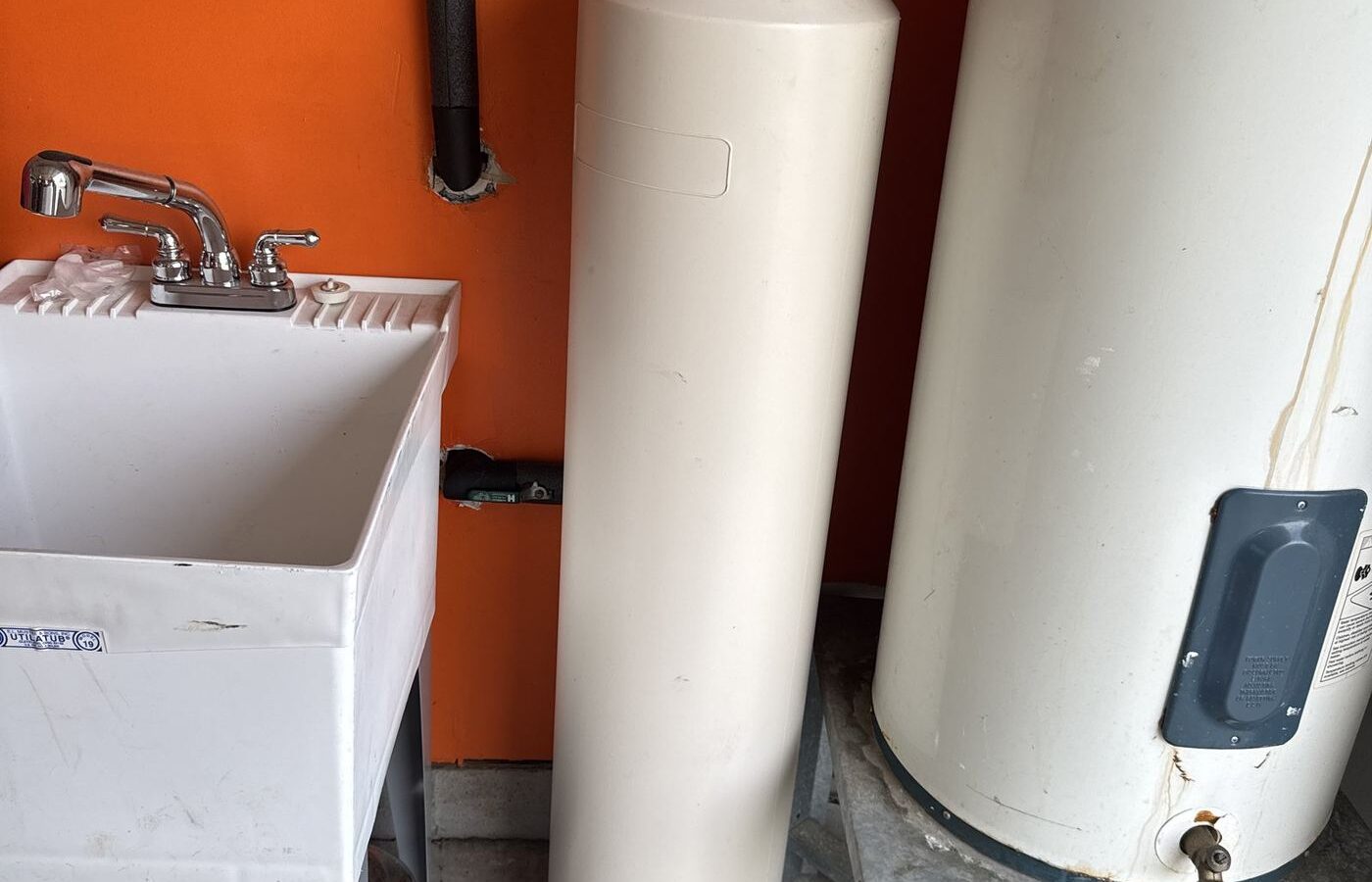
An aerator sized for a two-bathroom house won’t keep up with a home running two full baths, a kitchen and outdoor irrigation at the same time — undersizing is the most common reason a treatment system disappoints a homeowner who assumed the equipment itself was the problem. We test your water for iron and sulfide concentration and size the contact tank and filter bed to your household’s actual peak flow rate, not just square footage, so the system keeps up when it’s actually being used. That sizing conversation also covers where the unit gets installed, since it needs room for the contact tank, a drain for backwashing, and reasonable access for the periodic service it will eventually need.
Well Water Treatment Across the Upstate
WC Plumbing & Water Treatment tests, sizes and installs Duke Series aerators and related filtration for homes in Anderson, Pendleton, Seneca, Clemson and across the Upstate. South Carolina License CLM-114719MC. Call (864) 214-3250 or request a well water test.