Pickens County has plenty of housing stock old enough to still be running on supply lines that haven’t been standard practice in decades. Two materials in particular — galvanized steel and polybutylene — show up often enough in older Upstate homes that it’s worth knowing what they look like, why they fail, and when the right answer is a full repipe rather than another round of patching.
Galvanized Steel: Rusting From the Inside Out
Galvanized pipe was standard in homes built before the 1960s and into the ’70s in some areas, and it was a real improvement over what came before it at the time. The zinc coating that protects the steel underneath wears away from the inside over decades of water flow, and once it’s gone, the exposed steel starts to corrode and build up mineral scale — a process called tuberculation. That buildup narrows the usable diameter of the pipe from the inside, which is why homes on old galvanized lines often notice water pressure declining gradually over years rather than dropping all at once. Eventually the corrosion eats through the pipe wall entirely, and that’s when a slow pressure problem turns into an active leak.
Polybutylene: A Different Failure Pattern
Polybutylene pipe — usually gray, sometimes a dull blue — was installed widely from the late 1970s through the mid-1990s as a cheaper alternative to copper. It doesn’t corrode the way steel does, but it has its own well-documented weakness: chlorine and other oxidants commonly used in water treatment react with the plastic over years of exposure, making it brittle from the inside. Fittings are often the first point of failure, and because the pipe itself can look completely fine on the outside right up until it splits, polybutylene has a reputation for failing without much warning. It’s also part of why some insurers ask about it directly before writing a policy on an older home.
How to Tell What You Actually Have
Most homeowners can’t identify their own supply pipe material with confidence, and that’s fine — a magnet sticks to galvanized steel but not to copper or plastic, which is a quick first check at an exposed section near the water heater. Polybutylene is usually gray, occasionally black or blue, and is noticeably more flexible than PVC. If you’re not sure, it’s worth having it identified during any service call rather than guessing, since the material on hand changes both the urgency and the recommended fix.
Warning Signs Worth Acting On
- Rusty or discolored water, especially right after the water has sat unused for a few hours — a classic sign of galvanized pipe corroding internally.
- Steadily declining water pressure across the whole house, rather than at just one fixture, pointing to narrowing pipe diameter throughout the system.
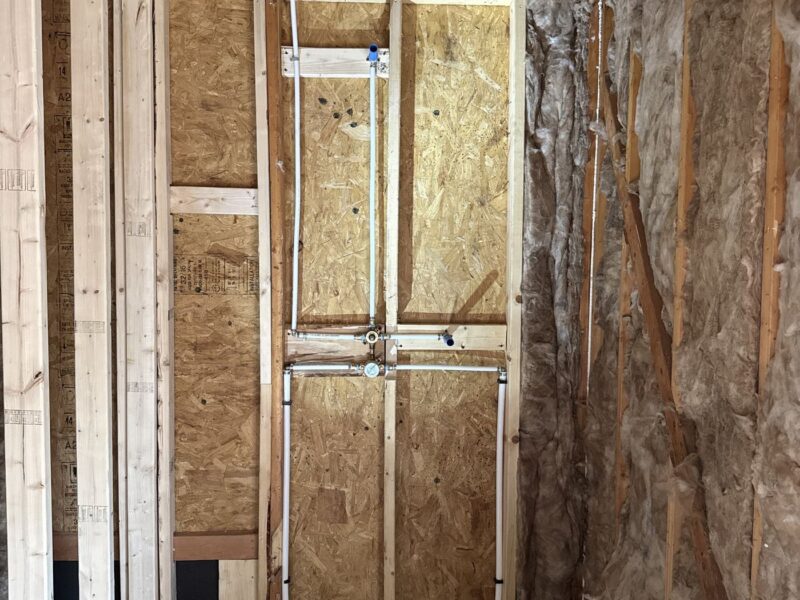
- Visible gray or blue plastic pipe at the water heater connections or in the crawlspace — worth having identified even if nothing has failed yet.
- Pinhole leaks that show up as damp spots or small drips at a fitting, particularly recurring ones in different spots over time.
- A pattern of repeated small leaks rather than one isolated incident — a sign the whole system is nearing the end of its useful life, not just the section that failed.
Patch the Leak, or Repipe the House?
A single isolated leak on an otherwise sound system is usually worth a straightforward leak repair. But once galvanized or polybutylene pipe starts failing in more than one spot, patching becomes a pattern of chasing the next leak rather than solving the underlying problem — the material itself is what’s failing, not any one section of it. At that point, a full re-piping with modern PEX or copper is usually the more cost-effective path, since it replaces the whole liability at once instead of paying for repair after repair on a system that’s only going to keep degrading.
Repiping sounds more disruptive than it usually is. Most whole-home jobs are completed room by room, and the improvement in water pressure and water quality is often immediately noticeable, especially in a home that’s been living with narrowed galvanized lines for years.
Repiping Older Homes Across the Upstate
WC Plumbing & Water Treatment evaluates and repipes older galvanized and polybutylene systems for homes in Pickens, Easley, Clemson, Anderson and across the Upstate. South Carolina License CLM-114719MC. Call (864) 214-3250 or schedule a repipe evaluation.